- CTO Learnings
- Posts
- Can I touch AI?

I’ve had conversations with dozens of CTOs about their AI strategies. The discussion almost always shifts from “Which AI tool should we use?” to a more foundational question: “What form factor of AI is best for us?”.
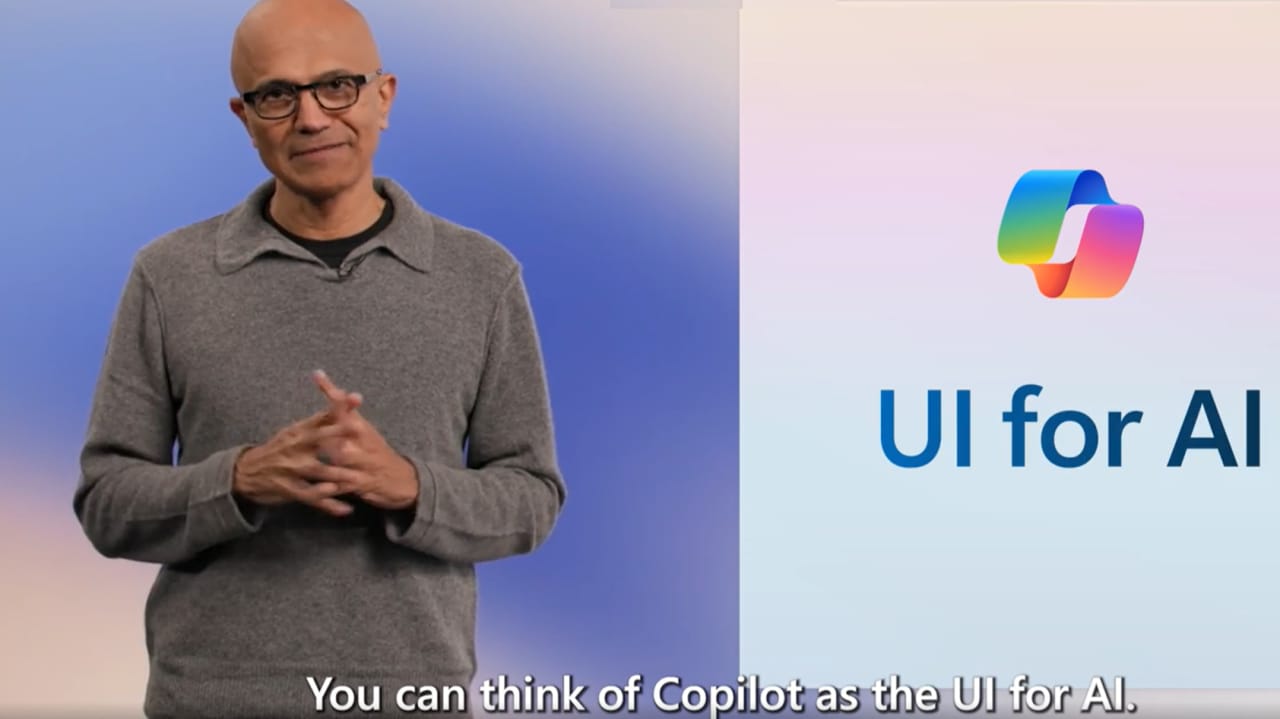
Satya Nadella (CEO of Microsoft) called Copilot the UI for AI.
Broadly, AI tools fall into a few distinct categories:
1. Conversational AI (ChatGPT, Copilots, Assistants) – These are interface-driven AI tools designed for direct interaction. They provide quick insights, answer questions, and assist in decision-making, making them particularly useful for knowledge workers.
2. AI-Enhanced Platforms (HubSpot, Salesforce, Notion, Microsoft 365) – These are software platforms embedding AI to enhance functionality. AI-powered features automate tasks like lead scoring, summarization, and predictive analytics, making them ideal for organizations that want AI embedded into their existing workflows.
3. Specialized AI Tools (Marketing, Legal, Finance, HR AI solutions) – These focus on specific business functions, whether it’s generating marketing content, analyzing contracts, or optimizing financial forecasts. They tend to be best for organizations with well-defined AI use cases.
4. Workflow Engines (AI Agents & Automation Platforms) – These operate behind the scenes, integrating with existing systems to automate end-to-end workflows. Instead of individual users engaging with AI, these tools handle processes autonomously—ideal for organizations looking to drive efficiency at scale.
5. Custom AI Applications (Bespoke AI Solutions) – For organizations with unique needs, custom AI applications offer the most flexibility. These could be internal tools, customer-facing AI products, or AI-powered automation built from scratch. They require more investment but offer tailored value.
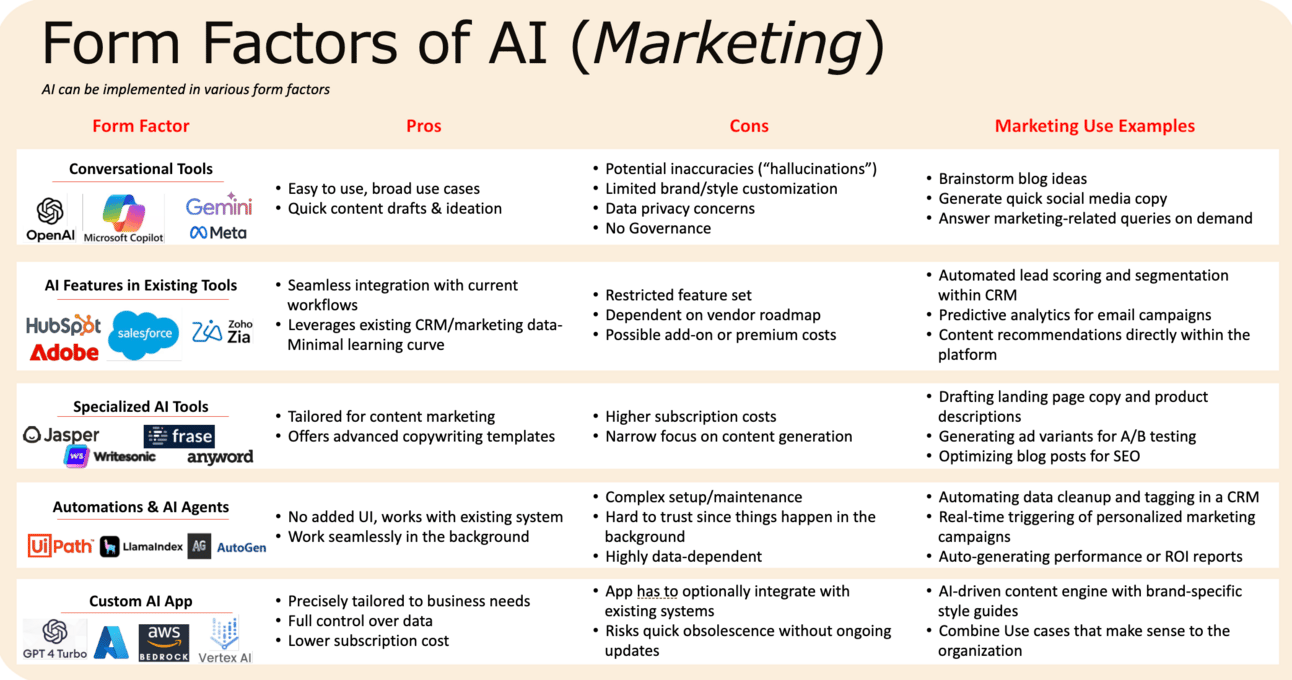
The Right AI Form Factor: A Strategic Decision
What has stood out in my conversations is that there is no universally “best” form factor. It depends on several factors:
• Maturity of Users – Are employees ready to engage with AI directly, or does AI need to work quietly in the background?
• Tech Stack – Does AI need to integrate into existing tools, or is there flexibility to adopt standalone AI-driven solutions?
• Budget & Resources – Is the goal to test AI with minimal investment, or is the organization willing to invest in deep integration and custom solutions?
Starting from the Right Question
Most AI adoption conversations start with “Whats the value of AI“ and “Which tool should we use?” But this skips a critical step. The better approach is to first define the value AI should deliver and the form factor that best fits the organization. Only then does it make sense to choose a specific tool.
AI is not just another piece of software—it’s a fundamental shift in how work gets done. The companies making the smartest AI decisions are the ones who are first asking, “How should AI fit into our organization?” and then deciding on the tool, not the other way around.
As AI adoption accelerates, I believe this will be one of the defining conversations for CTOs and leadership teams: In what form it should AI exist within their business.